
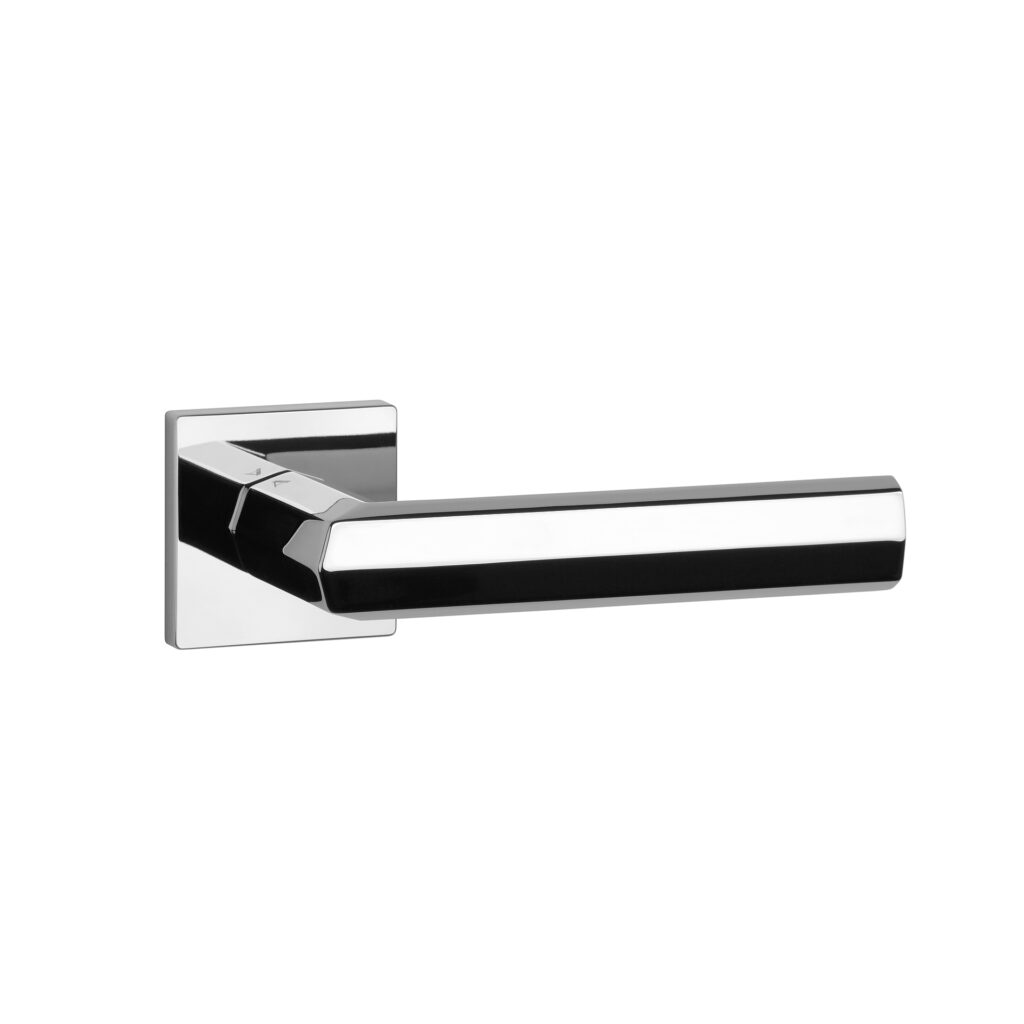
The same lever can come on a backplate (long plate) or on a rose (two small pieces). The choice completely changes the look of the door — and sometimes the compatibility with the lock too. Here is what each one means.
What a backplate is
The backplate is a long vertical platecovering both the handle area and the key area in a single piece. It is the classic option, found mostly on older doors and some metal entrance doors.
The advantage of the backplate: it covers a larger surface, hides any imperfections around the lock and gives a robust, traditional look.
What a rose is
The rose replaces the long backplate with two small separate pieces: one round or square piece under the handle and one under the key/cylinder. It is the modern, minimalist solution, preferred on today's interior doors.
On the slimversions the rose is very thin (5-7 mm) and barely rises off the door, for a clean, discreet look. See the range of Enger roses.
The main differences
| Criterion | Backplate (long plate) | Rose (small pieces) |
|---|---|---|
| Look | Classic, robust | Modern, minimalist |
| Surface covered | Large — hides imperfections | Small — shows off the door |
| Mounting | A single plate | Two separate pieces |
| Current trend | Traditional | Preferred in new interiors |
| Slim versions | No | Yes (5-7 mm) |
When to choose each
Choose a backplate
For older doors, metal entrance doors, or when you want to cover the area around the lock.
Classic
Choose a rose
For modern interior doors, in minimalist interiors, when you want a clean, discreet look.
Modern
Enger handles from the Aprile, Stile and Sterk lines are designed for a slim rose — the modern solution that shows off the design of the door.
Modern rose handles
Discover Enger handles on slim roses — a contemporary look for any interior door.